The Thumb in Palmistry: What It Says About Your Character and Will
In palmistry, the thumb is the most revealing finger of all: it indicates your willpower, decision-making ability, and the way you exercise your character. Learn to read yours with this practical guide.
Why the thumb is the most important finger in palmistry
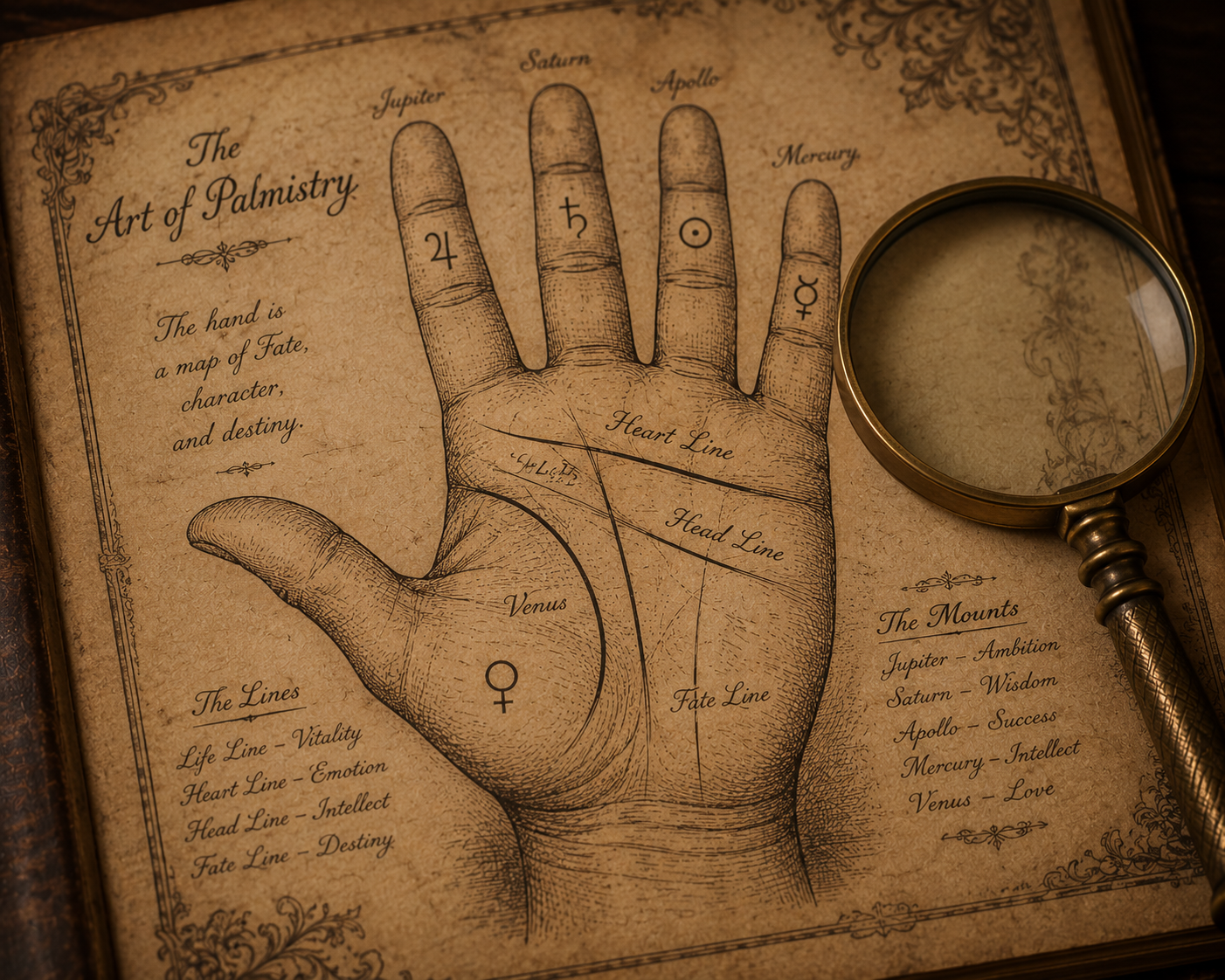
In Western palmistry, the thumb is not assigned to a specific planet like the other fingers — Saturn for the middle, Jupiter for the index — it is associated directly with the self: will, capacity for action, and strength of character. In the Chinese tradition of hand reading, the thumb represents the father and family heritage. A palmist who does not examine the thumb has an incomplete picture: it is the first indicator of how a person exercises their will in the world.
Long vs short thumb: what it says about your willpower
Thumb length is measured by comparing its tip to the first phalanx of the index finger when fingers are together. Long thumb (extends past the middle of the index): strong will, executive capacity, leadership tendency, sometimes authoritarianism. Short thumb (does not reach the index middle): difficulty maintaining firm decisions, tendency to be influenced, freer creativity but less discipline. A medium thumb indicates balance between will and flexibility.
The thumb's two phalanges: will and logic
The thumb has two clearly differentiated phalanges. The upper phalanx (the tip) represents will: if robust and rounded, it indicates practical determination; if thin and pointed, it suggests more intuitive than consistent willpower. The lower phalanx (the base, closer to the palm) represents logic and reasoning: a wide lower phalanx indicates the person thinks before acting; a very thin one may signal impulsiveness. The ratio between both tells whether the person acts more from direct will or prior reasoning.
The thumb angle: openness and rigidity of character
The angle the thumb makes with the palm when the hand is relaxed and flat is one of the most revealing indicators. An angle of 90 degrees or more indicates an open, generous, adaptable person with ease in relationships. A closed angle (thumb close to the hand) indicates reserve, distrust, tendency toward control and rigidity in opinions. Most people fall between 45 and 90 degrees, indicating a mix of openness and caution.
Want a complete reading of your hand's lines and fingers?
Upload a photo of your palm and receive a personalized analysis of the main lines, mounts, and fingers — including your thumb.
Upload your photo and get your readingFlexible vs rigid thumb: adaptability and control
Bend the last phalanx of the thumb backward with your other hand. If it bends easily beyond 45 degrees (flexible or hitchhiker's thumb), it indicates adaptability, generosity, and a tendency to change opinions easily — sometimes excessively. A rigid thumb that barely bends indicates strength of character and persistence, but also difficulty changing position when wrong.
Special marks and shapes of the thumb
A square thumb tip indicates practical, methodical thinking. A spatulate tip (wider at the end) indicates originality and independence. A thumb with a marked knot between the two phalanges (philosophic knot) marks someone who needs to understand the why before acting: slow to decide but firm once decided. The presence of deep lines on the thumb phalanges may indicate periods of tension or blockage in the expression of willpower.
The invisible in your inbox.
Palmistry, energy, and spiritual readings delivered to you.