Tarot for beginners: how to start your first reading
If you've never consulted tarot and don't know where to start, this guide covers the essentials: what a reading is, how online tarot works, what to ask, and which format is best for beginners.
What a tarot reading is and what to expect the first time
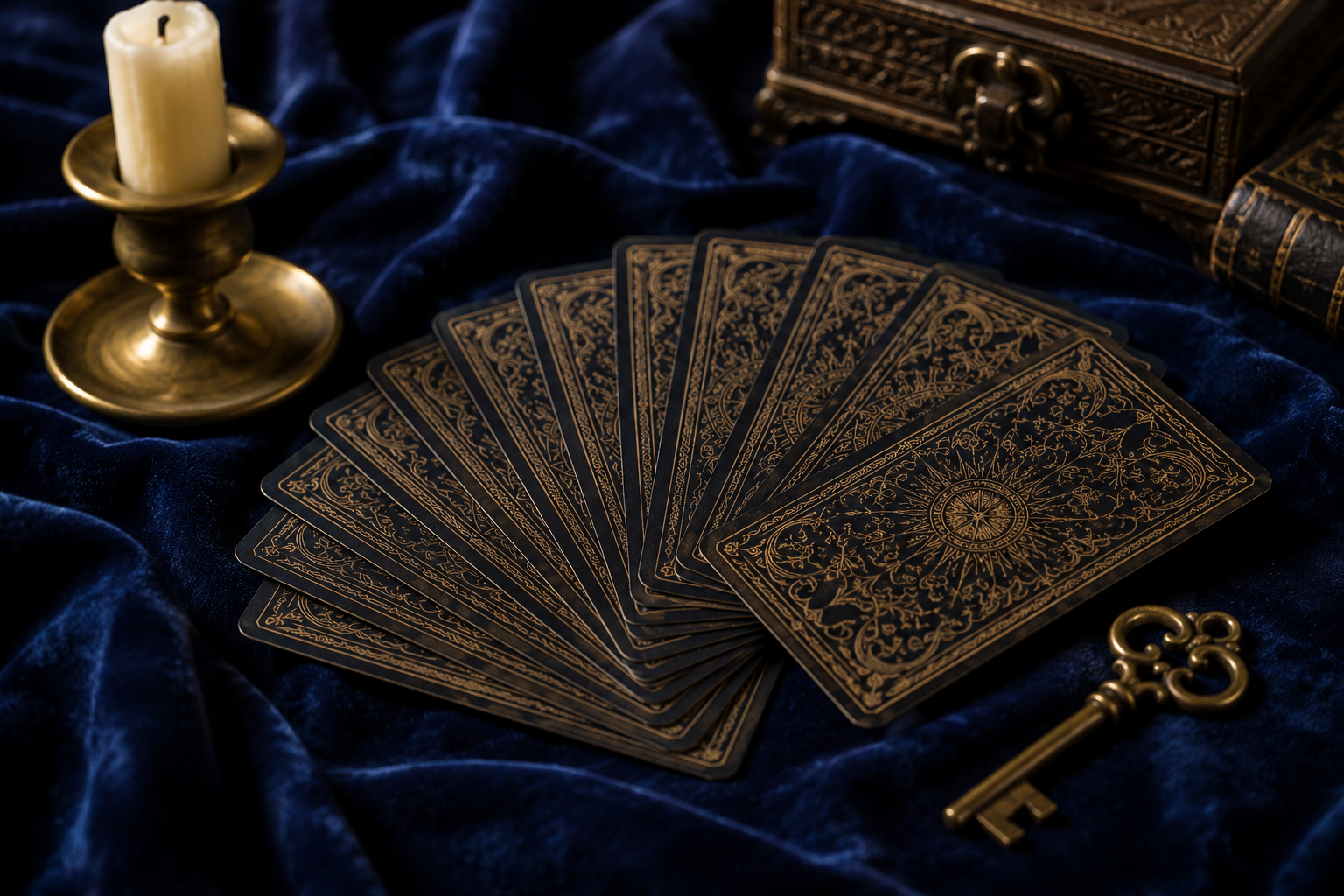
A tarot reading is a conversation between your question and the cards. There's no magic in the literal sense: there's a system of symbols that, when interpreted thoughtfully, can offer perspectives on a situation weighing on you. The first time you consult, the most useful thing is to arrive with a specific question in mind. You don't need to believe tarot predicts the future for the reading to be useful — you just need to be willing to look at your situation from a different angle.
How to frame your first tarot question
The best questions for a first reading are specific and oriented toward understanding or action. Avoid questions that are too vague, like how will my life go, and also questions that depend on what another person will do. These work better: what's really happening in this situation, what am I not seeing, what steps would be worth taking right now. A good question makes the reading much more precise and useful.
Which tarot format to choose when starting from scratch
For a first reading, the card of the day is the simplest entry point: one question, one card, one answer in a few lines. If you have a specific situation that needs analysis, the 3-card spread offers context around past, present, and possibility. If the situation is complex and has been ongoing, the 10-card Celtic Cross is the most complete reading available. General rule: start with the question you have and choose the format based on its weight. A minor doubt doesn't need 10 cards.
Your first tarot card, free
The card of the day is the best entry point: one question, one card, one direct answer. No registration required, no commitment.
Try the free card of the dayHow to read a tarot response with no prior experience
When you receive a tarot reading, don't try to memorize the meaning of each card before reading. Notice which part of the interpretation resonates with your situation and which doesn't. Tarot doesn't speak with mathematical precision: it speaks in tendencies and possibilities. If a card makes you uncomfortable, that's also information. If another brings relief, pay attention to why. The most useful answer is usually the one that affects you most.
Common mistakes in a first tarot reading
The most frequent is arriving without a clear question or with one that's too general. Another mistake is consulting the same topic several times in a short period hoping for a different answer: tarot tends to repeat the same message until it's processed. It's also a mistake to expect tarot to confirm what you've already decided. A good reading gives you perspective, not validation of what you want to hear.
Cards in your inbox, Mondays.
One tarot card every week with a direct reading, no fluff.