Right or left hand in palmistry: which one to read and why
The most common question in palmistry has an answer that varies by tradition. Here we explain what each hand represents and which palm photo to send for an accurate reading.

right or left hand in palmistry: why there is no single answer
Which hand should I photograph? That is, by far, the most common question before an online palm reading. The honest answer is that it depends on which system you use and what you want to know. There is no universal rule in palmistry: the Western and Chinese traditions give different answers, and there are variations within each. What is true is that both hands provide valuable information and that a complete reading always studies both. Understanding the difference between dominant and non-dominant hand is the first step to correctly interpreting what you see in your palm.
dominant hand and non-dominant hand: what each one represents
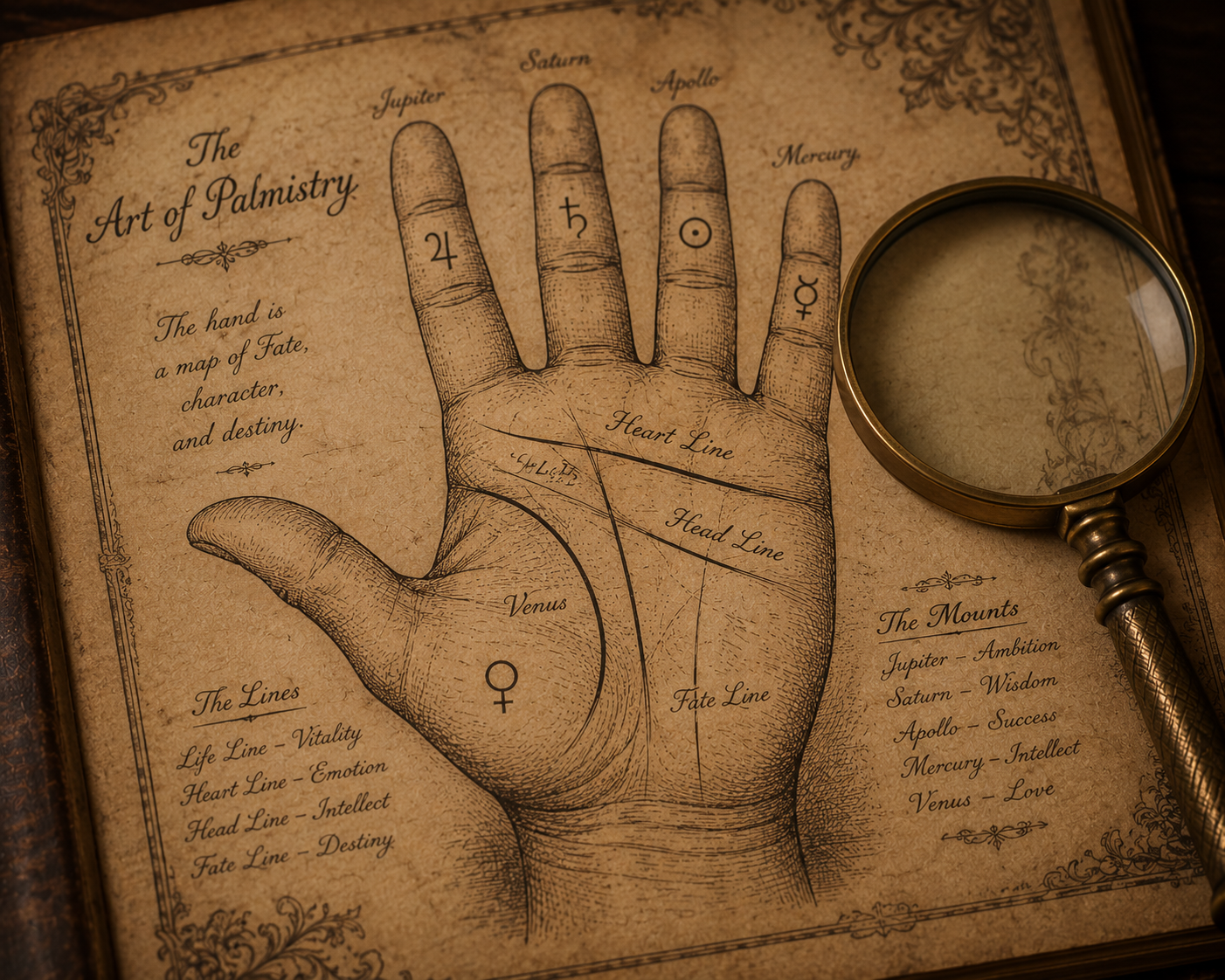
In modern Western tradition, the most widespread approach is: the dominant hand — the one you write with — represents what you have built, your current life, acquired habits, and the path you are on. The non-dominant hand represents the potential you were born with, your base character, and what you bring from origin. Comparing both hands is where the richest analysis lies: if the life line is longer in the non-dominant hand than in the dominant one, it may indicate the person is not fully leveraging their vital energy. If the mount of Jupiter is more developed in the dominant hand, it indicates self-confidence has grown with experience.
Want to know what your hand says?
Upload a photo of your palm — or both hands — and receive a complete analysis with all lines and mounts interpreted.
Upload my palm photoWestern palmistry: active hand vs passive hand
Some Western authors prefer to speak of the active hand, the dominant one, and the passive hand, the non-dominant one, rather than left or right, because the approach does not depend on body side but on use. The active hand shows the present and future: what you are doing with what you have. The passive hand shows the past and latent potential: what you started with. If both hands are very similar, it indicates a person who has closely followed their nature. If they differ greatly, there is a notable journey between the starting point and the present, which usually reflects important transformations in personal history.
Chinese palmistry: yin, yang, and gender differences
In Chinese tradition, the choice of hand follows a different logic. Historically, the left hand was read in men because the left side is associated with yang in certain schools, and the right in women. However, this distinction is increasingly unused in modern readings. Contemporary Chinese palmistry tends to favor the dominant hand to see active karma and the non-dominant hand for inherited or potential karma. In classical Chinese palmistry, both hands are always observed, along with skin colors, texture, and temperature — factors that complement the reading of the lines.
which hand to photograph for an accurate palm reading by photo
For an online palmistry by photo, the practical recommendation is to send your dominant hand's palm first. With just one photo, the analysis focuses on your current life and the path you have traveled. If you can also add the non-dominant hand, the reading can compare potential and reality and identify significant tensions or developments between both. The photo should show the palm fully open, with fingers extended but not forced, with good lighting and no shadows covering the lines. The right and left hands are photographed separately, not together in the same image.
Your reading in your inbox.
Receive palmistry, aura reading, and face reading analysis directly in your inbox.