Planetary aspects in astrology: trines, squares and oppositions explained
Planetary aspects are the angles planets form with each other in your natal chart. A trine flows, a square creates tension, an opposition polarizes. We explain the five main types and what they reveal about your character.
What are aspects in astrology
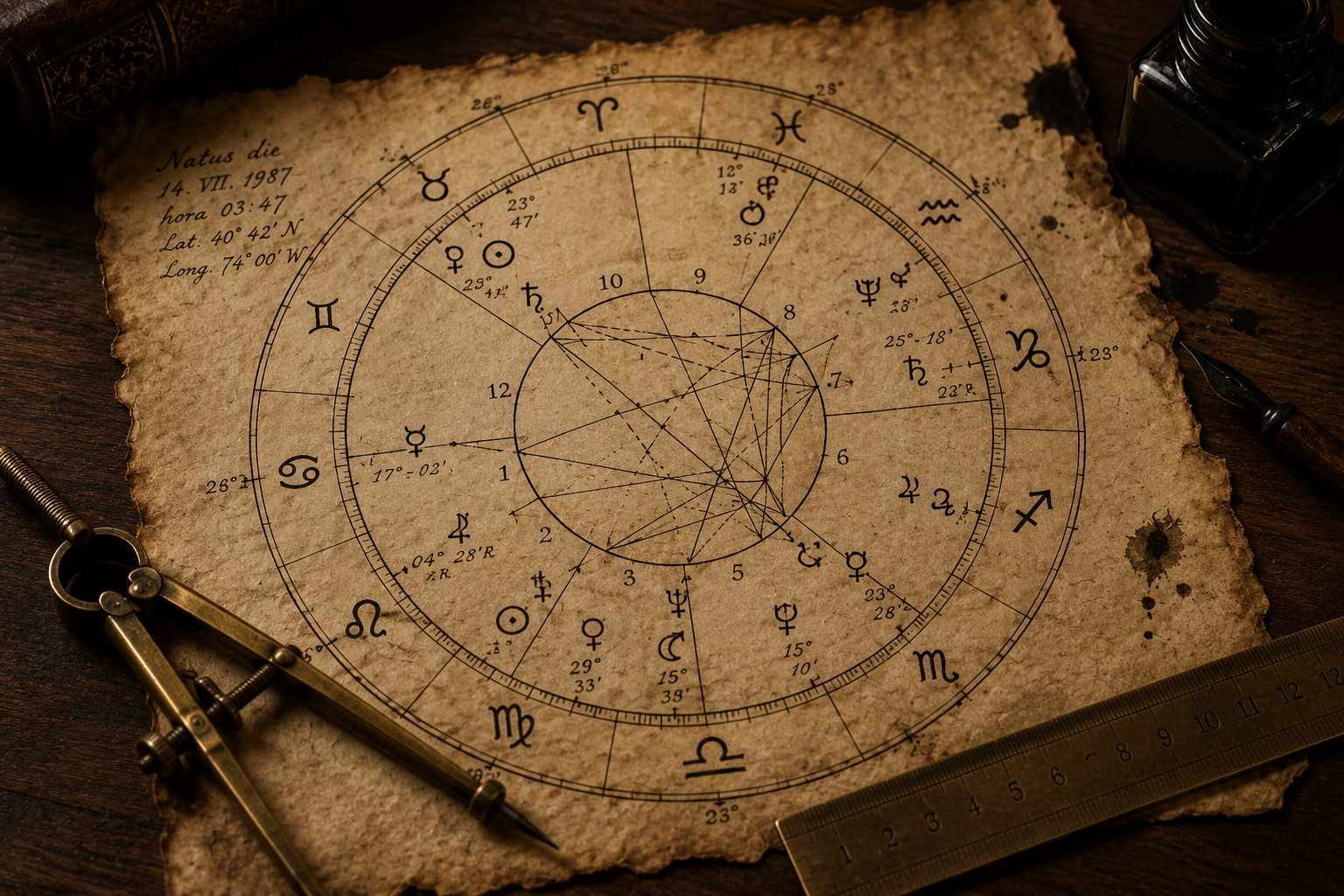
Aspects are the angles that planets form with each other within the natal chart. When two planets are 90 degrees apart, they form a square; at 120 degrees, a trine; at 180 degrees, an opposition. These angles are not symbolic: they are measured mathematically and determine whether the energy between two planets flows easily, creates friction, or generates creative tension.
The five main aspects: conjunction, sextile, trine, square, and opposition
The conjunction (0°) fuses two energies at a single point, amplifying them; it can be harmonious or conflicting depending on the planets involved. The sextile (60°) favors collaboration between two areas of life with conscious effort. The trine (120°) is the most flowing aspect: planets share an element and support each other without friction. The square (90°) creates tension between two planets of incompatible elements, generating momentum and pressure to act. The opposition (180°) confronts two opposing energies that need balance.
Easy vs tense aspects: what each one contributes
Easy aspects (trine, sextile) do not mean everything is perfect: they often indicate areas of natural talent that are taken for granted. Tense aspects (square, opposition) represent internal conflicts that, when worked through well, build character, determination, and resilience. Most people with very harmonious but tension-free charts have difficulty activating themselves. The challenge is not to eliminate squares, but to integrate them.
See all aspects in your natal chart
A complete birth chart reading analyzes what aspects you have, between which planets, and how they influence personality, love, career, and purpose.
Get my birth chartHow to read aspects in your natal chart
In the natal wheel, aspects appear as lines crossing the inside of the circle. Red lines typically represent tensions (squares and oppositions) and blue lines represent harmonies (trines and sextiles). A stellium involves multiple conjunctions concentrated in one area. The orb (degree of tolerance for considering an aspect active) varies by astrological school, but generally ranges between 5 and 10 degrees for major aspects.
The most important aspects for love and career
In the realm of love, aspects between Venus, Mars, and the Moon are the most revealing about how someone loves and what attracts them. Professionally, aspects of Saturn and Jupiter with the Midheaven indicate career challenges and opportunities. Saturn squaring the MC can signal a career built through sustained effort; Jupiter trine the MC points to opportunities that arrive without active searching.
The sky in your inbox.
Astrological news and exclusive content every week.