How to read your palm step by step: complete palmistry guide
Learn to read the palm of your hand from scratch: which hand to read, hand shape, main lines, mounts and special signs.

which hand to read in palmistry: dominant, non-dominant, or both
The most common question before starting. In Western tradition, the dominant hand reflects lived experience and decisions made; the non-dominant shows inherited potential. Chinese palmistry focuses primarily on the dominant hand, though comparing both reveals the tension between fate and free will. For your first reading, start with the dominant hand.
hand shape: what your palm and finger type reveal
Before reading the lines, observe the shape. A square palm with short fingers indicates a practical, earth temperament; a rectangular palm with long fingers points to water sensitivity and intuition; a rectangular palm with short fingers suggests fire and action; a square palm with long fingers indicates air and analytical thinking. These are starting points, not rigid categories.
the four main lines of the hand: a visual guide
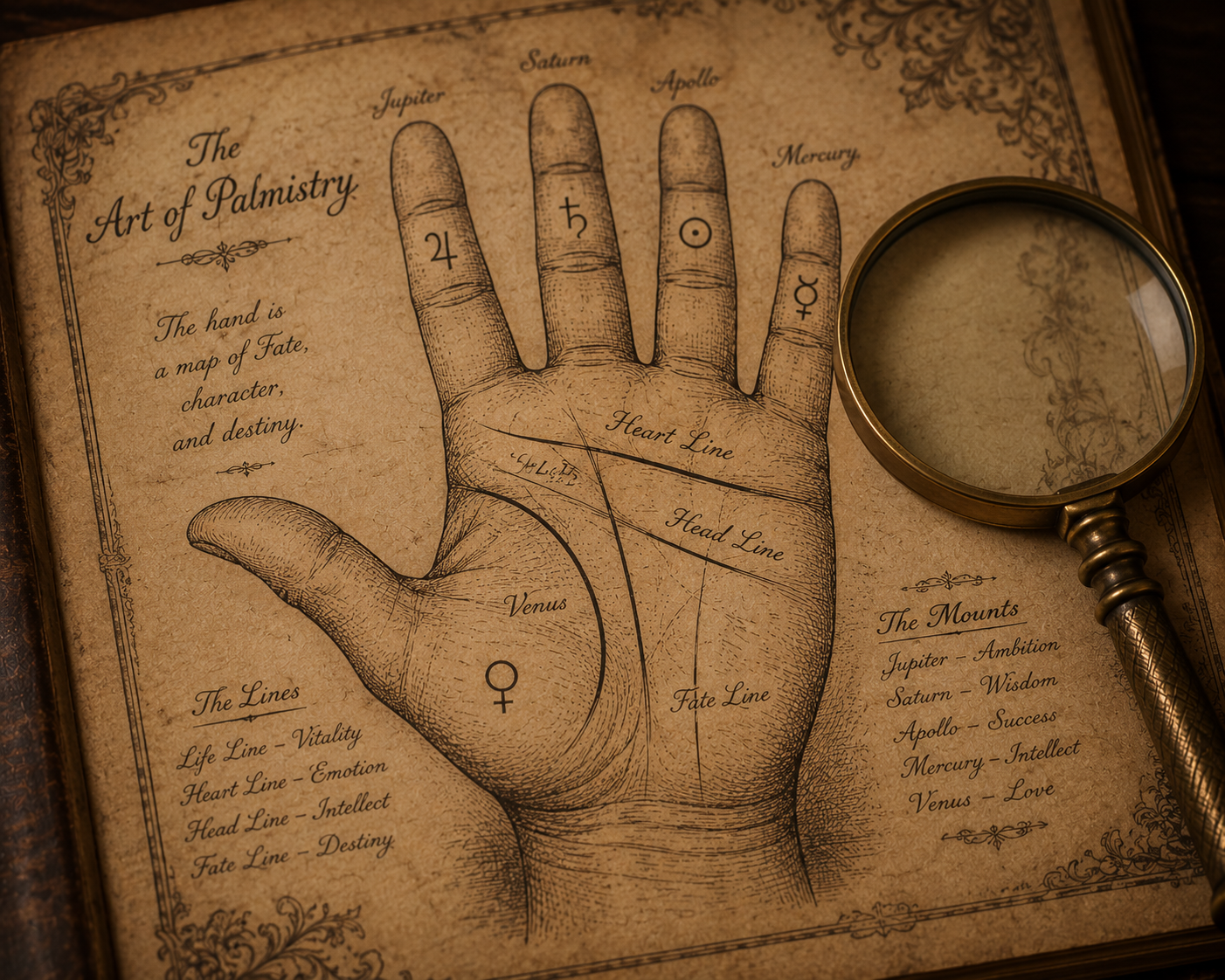
The life line curves around the mount of Venus (base of the thumb) and speaks of vitality, not years of life. The head line runs across the center of the palm and reflects mental style and decision-making. The heart line starts under the little finger and runs across the top: emotions, relationships, and love life. The fate line (not always present) runs vertically up the center: purpose and career. Locate each one before interpreting.
Prefer to have someone read it for you?
Upload a clear photo of your palm and receive a complete analysis of your four main lines and the mounts of your hand, personally written for you.
Upload my photothe mounts of the hand and how to read them
The mounts are the fleshy elevations beneath each finger and at the base of the palm. The Jupiter mount (under the index finger) speaks of ambition and leadership; Saturn (under the middle) of discipline and responsibility; Apollo (under the ring finger) of creativity and success; Mercury (under the little finger) of communication and business. The Venus mount (thumb base) indicates affection and sensuality; the Moon mount (opposite side) marks imagination and intuition. A prominent mount is a strength; flat or sunken indicates that area needs attention.
special signs: islands, chains, forks, and stars
An island on a line indicates a period of uncertainty or duality. Chains speak of frequent fluctuations or blockages. A fork at the end of a line broadens possibilities: two paths, neither necessarily better. A star, formed by several lines crossing at one point, marks a high-impact event, positive or negative depending on the mount where it appears. Influence lines are small secondary lines that nuance the main narrative.
common mistakes when reading your palm for the first time
The most common mistake is interpreting each sign in isolation. Palmistry is a system and lines are read in context: the overall hand, shape, mounts, and secondary lines modify each other. They should not be read as fixed predictions: palm lines change over time, especially between ages 20 and 40. A short life line does not mean early death; an absent fate line does not mean lack of purpose.
More about palmistry in your inbox.
Guides, line meanings, and answers to the most common questions. No spam, only content.