History of Tarot: Origin, Evolution, and How It Reached Us Today
The history of tarot from its 15th-century origins to the modern deck: how it evolved from an Italian card game into a self-reflection tool, and why its origin matters.
Where Tarot Cards Come From: The Documented Origin
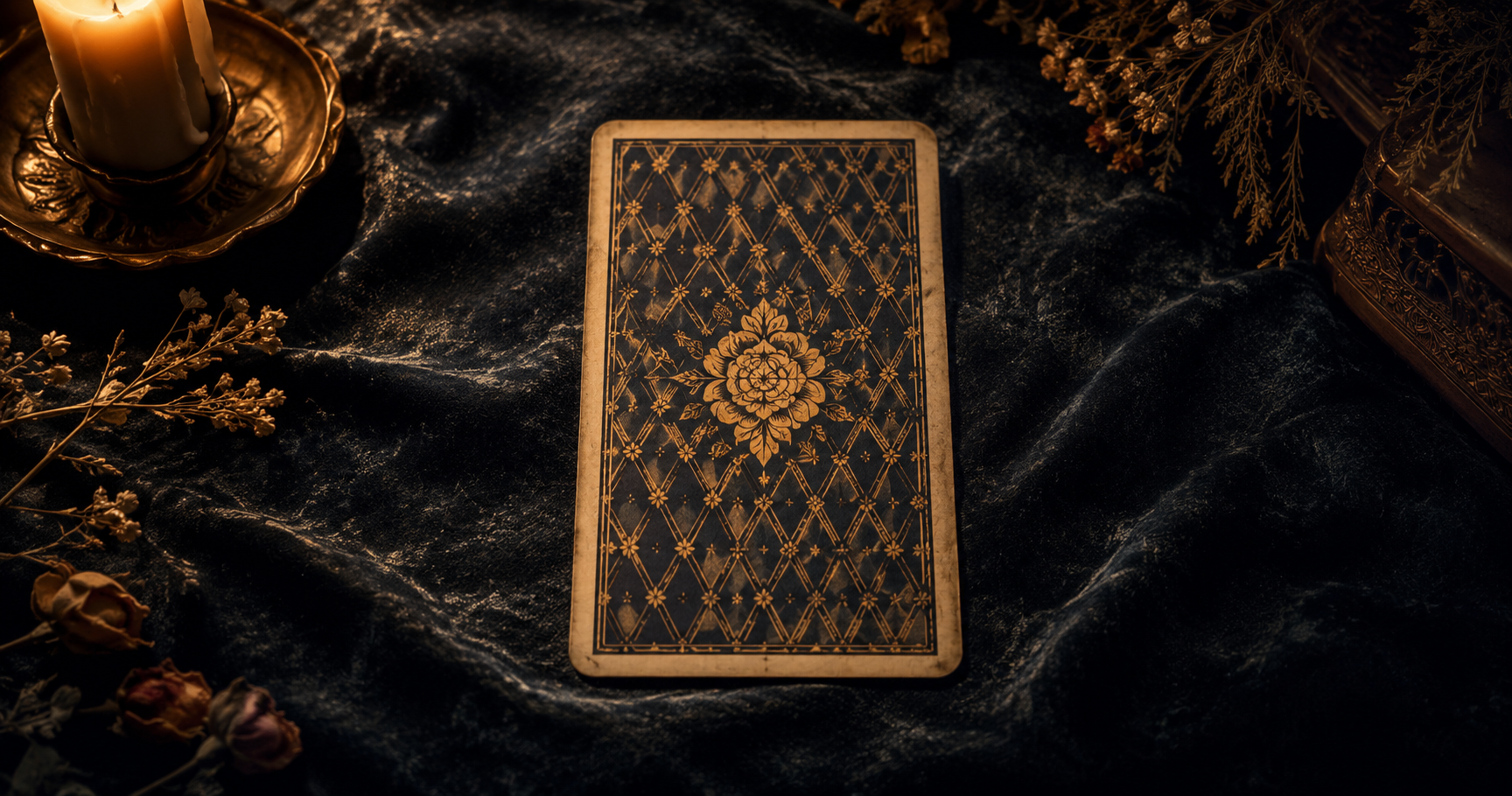
The earliest documented origin of tarot is northern Italy, around the 15th century. The first known decks, such as the Visconti-Sforza Tarot (circa 1450), were hand-painted luxury objects made for Milanese nobility, with no explicit divinatory purpose. They were used in a card game called tarocchi, similar to other card games of the period. The idea that tarot has Egyptian origins or was invented by the Knights Templar is an 18th-century myth with no historical basis.
From Italian Card Game to French Esoteric Tarot
During the 16th and 17th centuries, tarot spread across Europe as a card game. It was not until the 18th century that French esotericists began attributing symbolic meanings to the cards and linking them to Kabbalah, Hermeticism, and astrology. Antoine Court de Gébelin published in 1781 the theory that tarot originated in ancient Egypt. This thesis was historically incorrect, but it was decisive in transforming tarot from a game into an esoteric tool and establishing the reading framework that persists today.
The Tarot of Marseille: Standardization and European Tradition
The Tarot of Marseille, developed in France between the 17th and 18th centuries, became the most widely used standard for more than two centuries. Its images are schematic: the minor arcana show only the suit symbols and numbers, without narrative scenes. It is the reference deck for many European reading schools, especially those working with visual intuition and the symbolic geometry of the cards. The Marseille tradition prioritizes the deck's structure over narrative illustration.
The Rider-Waite-Smith: The Deck That Changed How Tarot Is Read
In 1909, occultist Arthur Edward Waite commissioned illustrator Pamela Colman Smith to design a new deck for the Hermetic Order of the Golden Dawn. Published by the Rider Company, it was the first deck to illustrate all 56 minor arcana with complete narrative scenes, not just abstract symbols. This decision radically transformed how tarot is read: it made interpretation more accessible and turned the Rider-Waite into the visual reference for most modern decks.
How Tarot Moved from Occultism to Self-Knowledge
From the 1970s onward, tarot began detaching from occultism to become a psychological and self-knowledge tool. Jungian psychology influenced this transition: the archetypes of the major arcana aligned well with Carl Jung's language of the collective unconscious. Today many people use tarot without any supernatural belief, as a mirror of internal situations and a tool for ordering thought when facing complex decisions.
Tarot of Marseille vs Rider-Waite: Two Traditions That Coexist
The difference between the two systems remains relevant today. The Tarot of Marseille demands more intuition and training in symbolic geometry; the Rider-Waite offers more immediate access thanks to its narrative scenes. Neither is superior: they are different tools with different traditions. The choice depends on reading style, the type of questions typically asked, and the relationship the reader wants to build with their deck.
Cards in your inbox, Mondays.
Tarot history, technique, and real readings. No empty mysticism.