Heart line in palmistry: what it means and how to read it
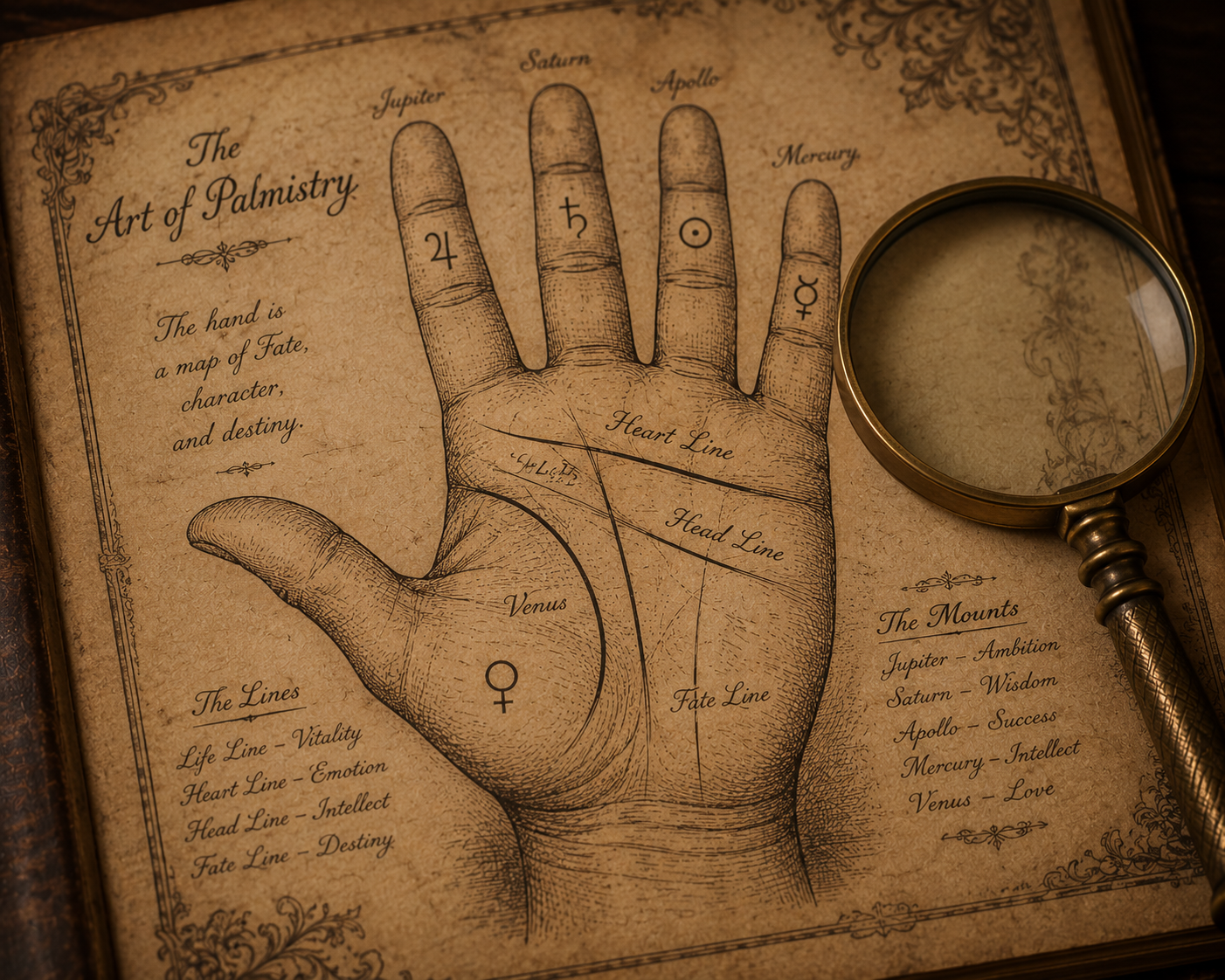
The heart line is the topmost horizontal crease on the palm. In palmistry it reveals your emotional style, capacity for love and relational patterns. Complete guide covering length, shape, forks and islands.

what is the heart line and where is it on the palm
The heart line is the topmost horizontal line on the palm. It runs from the edge of the hand below the little finger across toward the index or middle finger. In Western palmistry it is called the heart line or love line; in Chinese palm reading it governs the fire element — emotional energy, relationships and affective life. To find it: gently close your fist. The upper crease that forms is your heart line. Western tradition reads the dominant hand for the present and the non-dominant for innate potential.
heart line length: short, medium or long — what each means
The length of the heart line speaks to emotional range and relational style. Short (ends under the middle finger): the person is emotionally selective and self-contained. Not coldness — filtering deeply before committing. Common in highly independent individuals. Medium (reaches under the index finger): balance between giving and receiving; the most frequent configuration, associated with mature and reciprocal relationships. Long (crosses under the index finger or beyond): strong orientation toward others; high emotional generosity, sometimes to the point of self-sacrifice. Susceptibility to relational ups and downs.
straight vs curved heart line: emotional temperament
The direction of the line completes the reading of its length. Straight or horizontal: the person processes emotions analytically. They prefer reflection over physical expressions of affection. Their bonds are deep even if not outwardly obvious. Curved or arched upward: open, physical emotional expression. The person is affectionate, shows feelings easily and typically has a rich social life. Pointing between index and middle finger: the classic balanced configuration in palmistry. Indicates someone capable of feeling deeply and expressing it with composure.
forks, islands and chains on the heart line
Marks on the line refine the reading: Fork at the start (under the little finger): a significant emotional separation or reunion. It can be an inner transformation of affective life. Fork at the end: when the line splits into two branches near the index finger, it signals dual capacity — giving and receiving love with equal ease. In Japanese palmistry, one of the most favorable marks on the palm. Islands: small ovals on the line. They indicate periods of emotional confusion or ambiguous relationships. Duration is estimated by the size of the island. Chain: a series of linked islands. Common in people with high emotional sensitivity. Clean, continuous line: emotional clarity; the person makes relationship decisions decisively with few recurring doubts.
Heart line analysis by photo
Upload a photo of your palm and receive a full analysis: heart line, life line, head line and fate line. No appointment, delivered in 24-48 h.
Upload my palm photoheart line and head line: reading them together
Palmistry reads lines in context. The relationship between the heart line and the head line reveals the balance between emotion and intellect. Lines far apart: emotional and intellectual life operate in separate compartments. The person can work through a personal crisis without it affecting their reasoning, and feel deeply without it changing their logical output. Lines close together: emotion and reason are highly integrated. Thinking and feeling go hand in hand — a strength when internally consistent, a source of conflict when they point in different directions. Fused lines — simian line: one single horizontal line crosses the entire palm. Appears in fewer than 5% of the population. Exceptional concentration and intensity.
how to photograph your palm for an accurate heart line reading
For a photo-based reading to be precise on thin lines and small marks, image quality matters as much as the analysis: 1. Natural side lighting: light from one side makes lines cast shadows and appear more defined. 2. Palm extended, fingers together and relaxed: no tension — tension distorts the creases. 3. Neutral background: white paper or a plain dark surface. 4. Both hands if possible: dominant shows the present, non-dominant the potential. 5. No filters: social-media filters erase fine details that matter most in palm reading.
Palmistry in your inbox.
One palm-reading topic each week: lines, mounts, special marks. Straight to your inbox, no spam.