Fate line in palmistry: what it means to have one or not
The fate line is the fourth main line on your palm. Find out what it reveals about your life path and what it means to have it, not have it, or see it forked.

what is the fate line and where is it on the palm
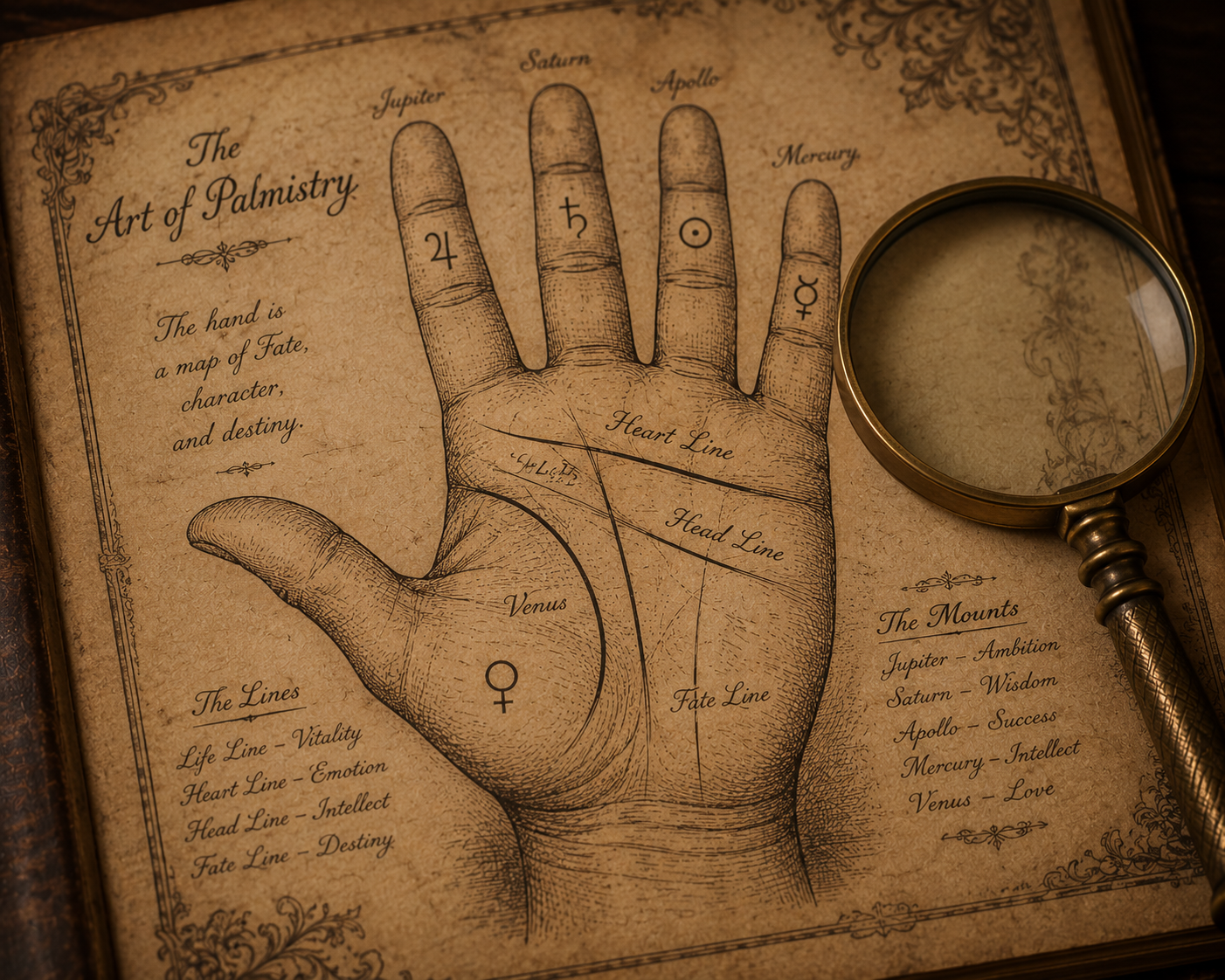
The fate line — also called the destiny line or Saturn line — is the fourth of the main palmistry lines, alongside the life, heart, and head lines. It rises vertically from the base of the palm near the wrist toward the mount of Saturn, at the base of the middle finger. Not everyone has one, and that itself is meaningful. When present, it can be continuous, fragmented, deviate toward other mounts, or split at the end. Each variation tells a different story about professional path, sense of purpose, and the ability to build something lasting over a lifetime.
no fate line: what it means in palmistry
One of the most common misconceptions in palmistry is thinking that having no fate line is negative. It is not. It means the person builds their path spontaneously, adapting to circumstances rather than following a fixed trajectory. It is often associated with highly flexible, creative people or those with very changing lives. In Western tradition, the absence of a fate line indicates destiny is not written in advance; in Chinese palmistry, it means the person's energy flows more freely, without a central pattern guiding them.
Do you have a fate line on your palm?
Upload a photo of your palm and receive a complete analysis of your four main lines, including the fate line.
Upload my palm photolong vs short fate line: how each case is interpreted
A long fate line that runs almost the full length of the palm from base to middle finger is associated with a clear vocation from a young age and a relatively steady professional path. A short line beginning mid-palm often indicates that the sense of purpose arrived later, perhaps in the thirties or forties. If the line starts from the mount of Luna on the outer edge of the palm, destiny is influenced by others or by the public — common in artists, teachers, or people in service roles. Starting from the mount of Venus indicates a life path deeply tied to personal or family relationships.
forks, islands, and breaks in the fate line
A fork at the end of the fate line — splitting toward the mount of Jupiter or Apollo — is generally positive: it indicates the person develops two complementary paths or achieves success in more than one area. Islands, closed ovals on the line, mark periods of confusion or professional blockage. Breaks or interruptions do not mean the path ends: they indicate direction changes, like a career switch or major life reorientation. A fate line that reappears after a break, slightly shifted, confirms that turn.
fate line in Chinese vs Western palmistry: key differences
In Western palmistry, the fate line is primarily associated with professional career and sense of purpose in public life. In Chinese tradition, it relates to the flow of karma and the relationship between personal effort and external circumstances: a strong line indicates the person works with the wind at their back. Chinese palmistry also pays more attention to the texture of the line: a thin, clear line is valued more than a thick, deep one, because it indicates balance between determination and adaptability.
Your reading in your inbox.
Receive palmistry, aura reading, and face reading analysis directly in your inbox.