Do Palm Lines Change Over Time? What Science Says
Yes, palm lines can change. Fingerprints do not, but the lines of the palm are dynamic. Science and palmistry agree on this point, though for different reasons.
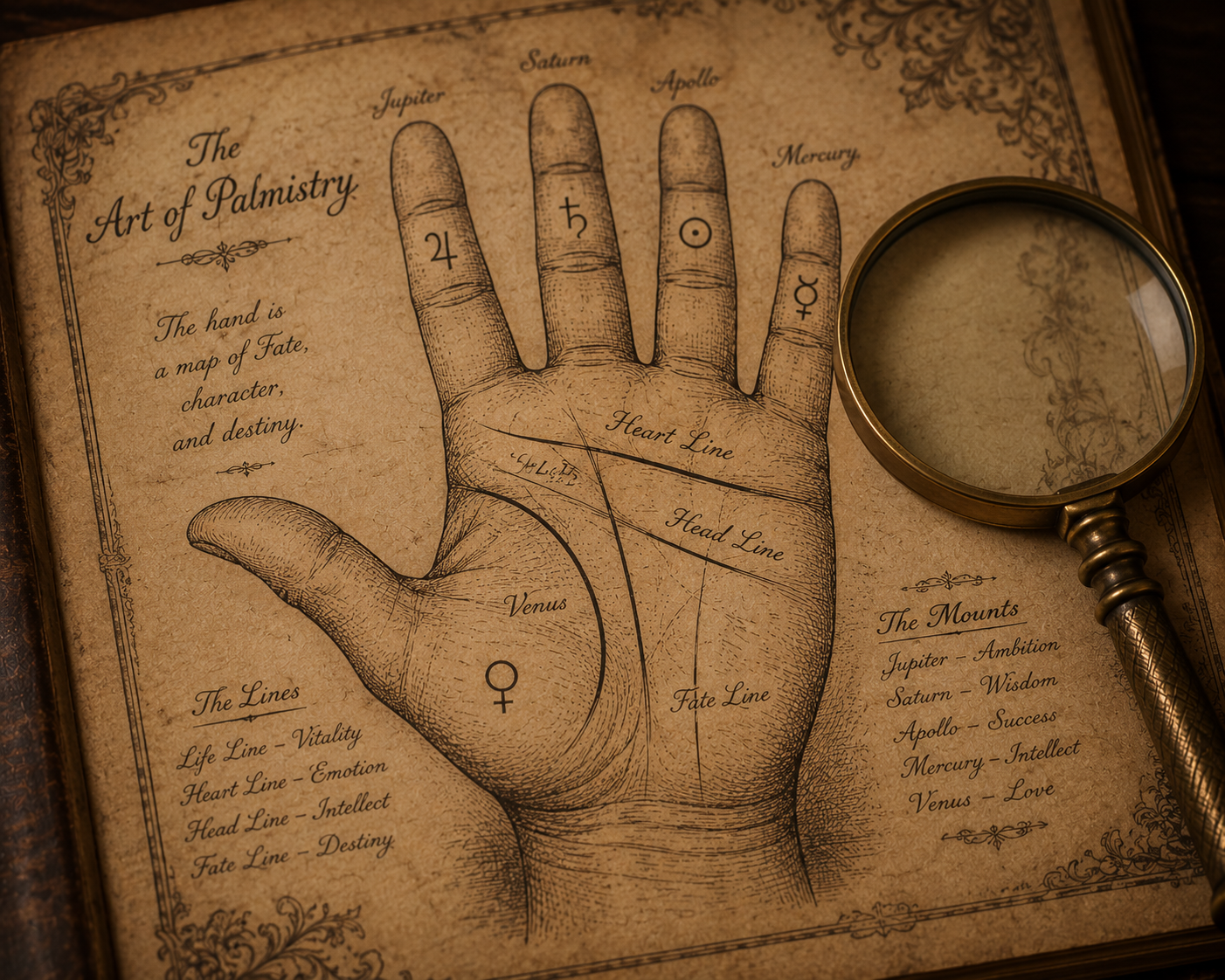
Do palm lines change? The short answer is yes
There is a common confusion between fingerprints and palm lines. Fingerprints (the patterns on fingertips) form in the womb between weeks 10 and 24 of gestation and do not change. But the major and minor lines of the palm are dynamic: they appear, deepen, branch, or fade over a lifetime. This is a documented dermatological observation, not a claim belonging only to palmistry tradition.
What dermatoglyphics says: the science of hand markings
Dermatoglyphics is the scientific branch that studies the skin patterns of hands and feet. Clinical studies in genetics and neurology use it mainly to detect chromosomal abnormalities (the single palmar crease appears in 50% of people with Down syndrome). What science confirms about change: flexion creases are modified by continuous hand use, sustained pressure, and changes in musculature. Palm lines are not static; they are the result of how you use and live with your hands.
Which lines are most stable and which change the most
The most stable lines are the three main ones (life, heart, head) in their overall trajectory. Their basic position changes little, though they gain or lose depth, branch, or develop secondary marks. The most dynamic lines are the influence lines (short lines branching off others), the fate line (which can appear or disappear after the age of 30), and the marriage lines (very sensitive to emotional changes). The mounts of the hand also vary in volume over the years.
When to notice changes: periods of intense transformation
Palmistry traditions have empirically observed that changes in lines tend to coincide with periods of significant transformation: a career change, a major loss, the beginning or end of a long relationship, or a health crisis. The plausible scientific explanation is that these events alter movement patterns, muscle tension, and hand use, which over time modifies palmar creases. The palmistry explanation adds that lines also reflect internal changes in vital energy. The two frameworks are not contradictory.
What do your lines say at this moment in your life?
A palm reading by photo analyzes the current state of your four main lines and mounts. Upload a photo of your palm.
Upload your palm photoPractical case: the fate line that appears after 30
The fate line (or Saturn line) is especially known for not being present from birth in many people. It is common for it to appear or become visible between the ages of 30 and 40, coinciding with when a person finds a clearer professional or life direction. This is not a mystical phenomenon: it is the materialization of decisions sustained over time that eventually create a pattern on the palm. Palmistry interprets it as an indicator of purpose found; science reads it as the result of consolidated motor habits.
How to track the evolution of your lines
The simplest method: photograph your palm (dominant hand) in good lateral light today and repeat the photo at 6 and 12 months under the same conditions. Compare the three photos. Look for changes in depth, new branches, lines that extend or break. You do not need to know palmistry to observe that something changed; you do need a professional reading to interpret what that change means in the context of your current life.
The invisible in your inbox.
Palmistry, palms, and readings with a real foundation every week.