The 10 Celtic Cross tarot positions explained
The Celtic Cross has 10 positions and each captures a different layer of the situation. A practical guide to what each placement means and how to read the spread as a whole.
What is the Celtic Cross and why 10 positions
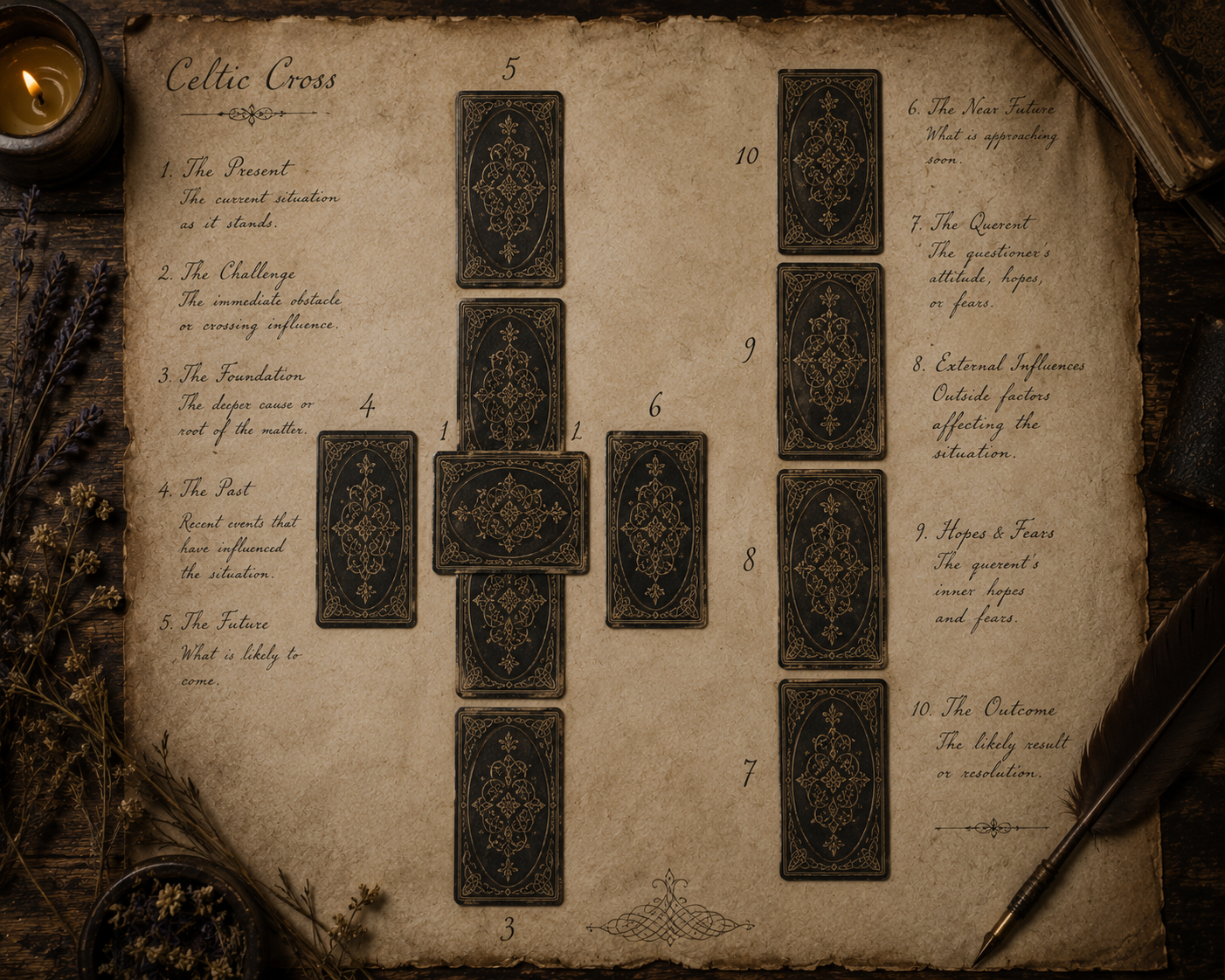
The Celtic Cross is the most complex and most widely used tarot spread in Western tradition. Its 10 positions are not arbitrary: each captures a different layer of the situation — from the most immediate context to the projected outcome and the forces operating beneath the surface. Understanding what each position sees completely changes the reading.
The 10 positions: what each placement means
Position 1 (center): the core situation, the heart of the question. Position 2 (crossing): what complicates or blocks it — can be an obstacle or a hidden support. Position 3 (below, root): the unconscious foundation, what underlies the situation without the querent fully seeing it. Position 4 (recent past): what just happened and still influences things. Position 5 (possible outcome): what might manifest if things stay the same. Position 6 (near future): what is about to enter the picture. Position 7 (the querent): how the person is approaching the situation — their resources or limitations. Position 8 (environment): the external people and forces affecting things. Position 9 (hopes and fears): what the querent wants or fears will happen. Position 10 (final outcome): the likely resolution if nothing changes.
How to read the Celtic Cross as a whole
The most common error is interpreting each card in isolation. The Celtic Cross works as a narrative: the recent past (position 4) explains the root (3), the root feeds the central situation (1), and the environment (8) and querent (7) determine whether the final outcome (10) is fixed or changeable. When the final outcome looks difficult, look at position 9 — that is usually where the key to change is hidden.
Request your Celtic Cross reading
A 10-card spread with interpretation for each position and a final synthesis. For when a short answer is not enough.
Get my Celtic CrossThe positions that confuse most readers
Position 2 (crossing) is the most misunderstood: it is not always an obstacle. If the card is positive, it may point to support that is not being used. Position 9 (hopes and fears) also creates confusion because it blends desire and fear into one card. The way to distinguish them is to look at the full spread and see whether the querent is driving or blocking the situation.
When to request a Celtic Cross online
The Celtic Cross works best with open, complex questions: a relationship with many variables, a significant career decision, a period of change with no clear direction. It is not the right spread for yes-or-no questions. If your question fits in ten words, request a 3-card spread. If it has layers, request the Celtic Cross.
Cards in your inbox, every Monday.
Weekly guidance on how to read tarot more clearly.